Introduction
Building a wooden summerhouse or cottage in the Moscow region combines traditional charm with modern comfort. This guide walks you through every step — from choosing the right plot to finishing the interior — with Moscow-specific considerations (climate, soil, permits, utilities). Use it as a roadmap to plan, budget, and avoid common pitfalls.
1. First decisions: purpose, scale, budget
— Define the purpose: seasonal dacha, year-round cottage, rental, or guest house. This determines insulation, systems, and foundation depth.
— Decide size and layout early: basic summerhouse (20–50 m²) vs. family cottage (80–200+ m²).
— Set a realistic budget and contingency (at least 10–20% extra). Cost drivers: foundations, quality of timber, HVAC, and utility connections.
2. Land selection — what to check on the plot
— Zoning and land use (назначение участка): confirm whether the plot permits residential or garden structures. Check local municipality and the cadastral registry.
— Legal status: ownership documents, easements, and encumbrances. Ensure no disputes.
— Access and infrastructure: road access year-round, distance to electrical network and gas mains, proximity to water sources.
— Soil and topography: in Moscow region you may encounter clay, loam, sand, or peat. Order a geotechnical survey — foundation type depends on frost heave risk and bearing capacity.
— Flooding and drainage: avoid low-lying flood-prone sites; check groundwater level.
— Neighbors and view corridors: privacy, sun exposure (south-facing facades get best light), prevailing winds.
3. Permits and regulations (practical tips)
— Check local requirements with the municipal administration. Requirements vary: some small garden houses may fall under simplified procedures, larger or year-round houses commonly need project approval.
— Know the main documents to verify: cadastral plan, land deed, zoning restrictions, building permit (if applicable), and utility connection agreements.
— Consult a local architect or lawyer to navigate СНиП (building norms) and municipal rules. Don’t rely solely on verbal assurances.
4. Choosing the construction type and timber
— Typical wooden house systems:
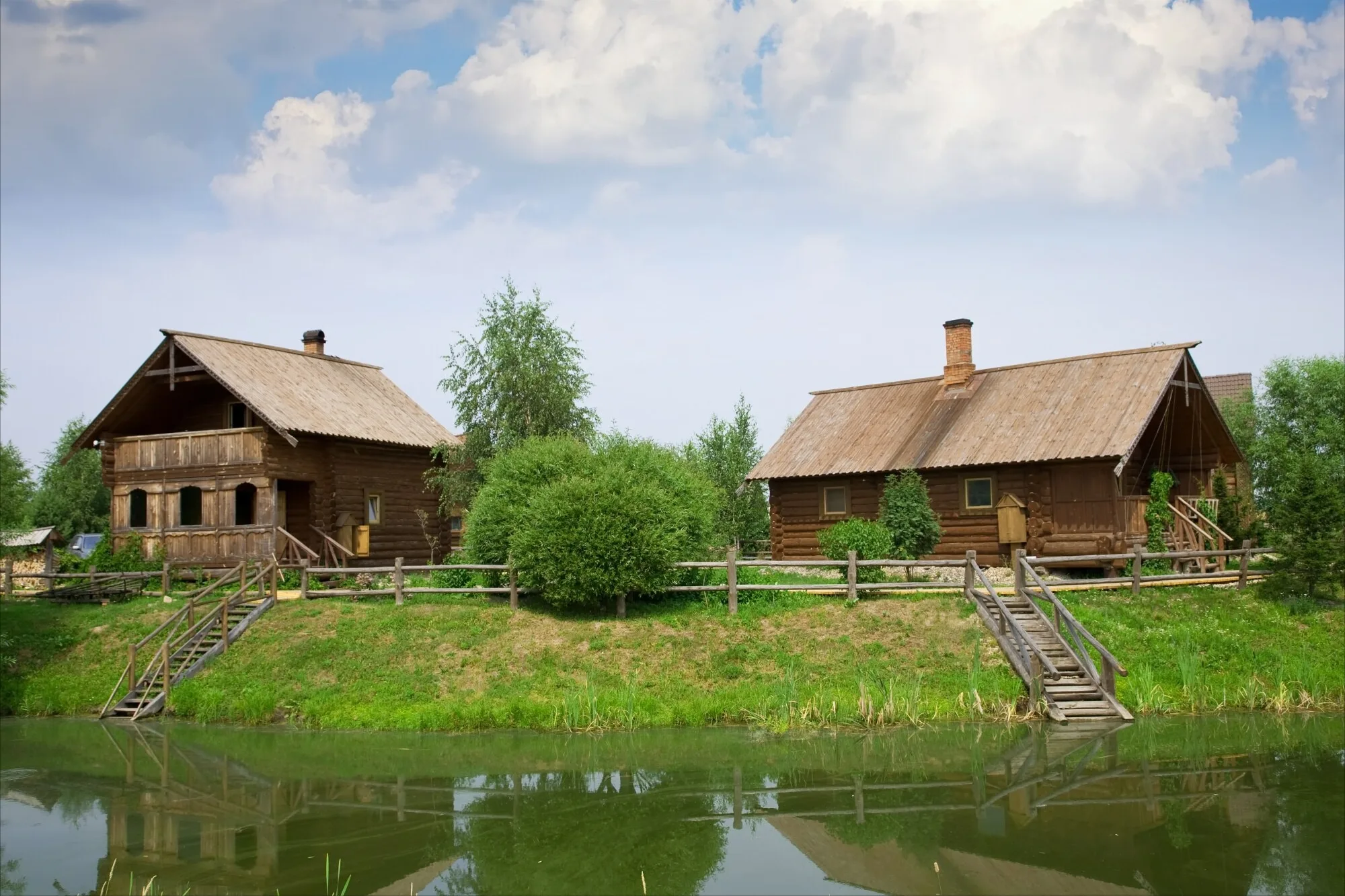
— Log house (бревно): classic aesthetics, thermal mass, needs shrinkage allowance. Larch and pine are common.
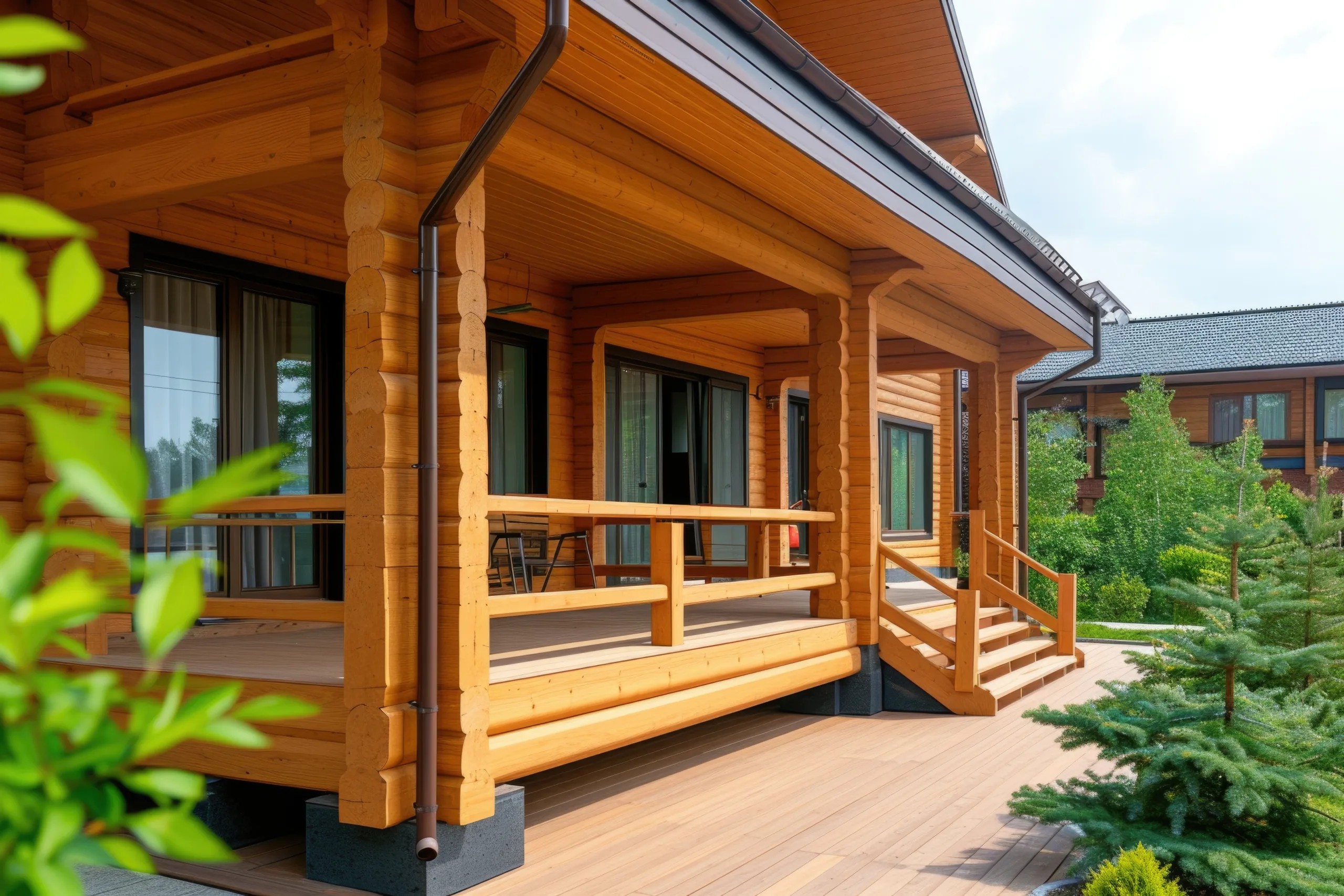
— Profiled timber (бревно/брус): easier to assemble and finish; glued laminated timber (glulam) resists warping.
— Frame house (каркасный): faster and cheaper, good for well-insulated year-round homes.
— SIP panels: fast assembly and high insulation; requires careful moisture control.
— Wood species:
— Pine/ Spruce: economical, widely available.
— Larch: more durable and rot-resistant outdoors.
— Glulam: stable, engineered option for beams and large spans.
— Treatment: all exterior wood must be protected with primer, antiseptic, and UV finishes; interior wood needs acclimatization before finishing.
5. Foundations — matching soil & frost
— In Moscow climate, frost depth commonly reaches around 1.2–1.5 m — foundation must be below frost line or designed with frost-protection measures.
— Typical foundations:
— Pile (screw) foundations: ideal for peat, loose soils or uneven terrain; faster and less excavation.
— Strip/strip-footing: common for stable soils; concrete strip under load-bearing walls.
— Slab-on-grade: good for heavier structures and even soils; thermal and moisture control required.
— Always base the decision on a geotechnical report and recommendations from an engineer.
6. Structural sequence and onsite stages
— Site preparation: clearing, temporary access, leveling, drainage plan.
— Foundation work: excavation, waterproofing, backfill, and site drainage.
— Floor and substructure: floor joists, vapour barriers, and ventilation under floors.
— Erection of walls/frames or log raising.
— Roofing: choose durable roofing (metal tile, soft shingles, profiled metal); proper insulation and ventilation in the roof space is crucial.
— Windows and doors: select energy-efficient windows (double/triple glazing for year-round homes), pay attention to proper installation and airtightness.
— External finishing: cladding, porches, terraces, painting/staining.
— Utilities rough-in: plumbing, heating, electrical before interior finishes.
— Interior finishes, insulation, and commissioning.
7. Insulation, heating, and energy systems
— Insulation targets:
— Seasonal summerhouses: moderate insulation to keep comfortable in warm months.
— Year-round cottages: high-performance insulation in walls, roof, and floor; airtight construction with controlled ventilation.
— Heating options:
— Gas central connection: popular where mains gas is available — economical heating and hot water.
— Solid fuel (wood/coal) stoves or fireplaces: traditional, cozy; require chimney and safety measures.
— Electric heating: simple but potentially expensive; consider heat pumps (air-source) for efficiency.
— Pellet boilers: automated solid fuel option for rural cottages.
— Hot water and boilers: choose system aligned with fuel availability and required comfort level. Consider backup heat sources.
— Ventilation and moisture control: controlled mechanical ventilation with heat recovery (HRV/recuperator) is highly recommended in well-insulated wooden houses to prevent condensation and mold.
8. Water supply and sewage
— Water sources: municipal supply (if available), local well, or borehole. Test water quality before committing.
— Sewage solutions:
— Connection to municipal sewage (if available) is simplest.
— Septic tanks or compact treatment plants (biological treatment) are common in countryside; choose based on soil infiltration capacity and regulation.
— Frost-proofing: protect piping and tanks for winter use if the house is used seasonally.
9. Electricity and communications
— Plan electrical load early: heating, pumps, kitchen appliances, lighting, workshop tools.
— For remote plots, consider generator backup or battery storage with solar panels for off-grid or unreliable supply.
— Internet/phone: check mobile coverage; consider wired options (fiber) if available — useful for remote work and security systems.
10. Contractors, procurement and contracts
— Compare 3–5 builders/teams; ask for portfolios, references, and site visits.
— Use a written contract with scope, milestones, payment schedule, quality guarantees, and penalties for delays.
— Prefer fixed-price contracts for defined projects;